


Bengal’s New Dawn: How a Son of the Soil Is Ready to Deliver Jobs, Skills, and opening of doors for youths to explore Global Opportunities



KOLKATA – Bengal has always had brilliant young people. What it has lacked, for too long, is the right doors opening for them at the right time.
That is beginning to change. This May, Bengal voted with purpose — for jobs, for growth, for a state that finally matches the ambition of its own youth. It was a vote for change , a vote to align Bengal’s future with the Honorable Prime Minister Modi’s vision of Viksit Bharat — a prosperous India by 2047 — gives that ambition a national home. Bengal now wants to be at the front of that journey.
Paramananda Santra, a healthcare strategist and son of Bengal, may be one of the people who helps make that happen.
He is now bringing all of it home.
Santra has presented a concrete, ready-to-execute roadmap to the new West Bengal state government — a blueprint that could put thousands of the state’s young men and women on a path to high-value international careers in healthcare and allied sectors, while simultaneously strengthening the state’s own health infrastructure.
The WHO Nomination That Changes the Conversation
This month, Santra was nominated as a Member of the WHO Technical Education Committee — placing him among a small, elite group of global experts who shape international health workforce policy, lifelong skilling for the health care work force. It is not an honorary title. It is a working seat at the most consequential table in global healthcare governance.
For West Bengal, it means the state now has direct access — through one of its own — to the networks, standards, and global frameworks that define where the world’s healthcare jobs are going next. That is a strategic asset the new government would be wise to act on quickly.
A Proven Builder — Across States, Across Millions of Lives
Santra’s vision is not theoretical. He has delivered it, repeatedly, across India.
Santra’s vision is not theoretical. He has delivered it, repeatedly, across India.
In Gujarat, he aligned state skilling infrastructure with global employer standards — building pipelines that now connect Gujarati healthcare workers directly to opportunities in the UK and Europe, creating not just certificates, but actual careers. In Haryana, he built deployment-linked training programs with live international recruitment pipelines, turning locally trained workers into globally placed professionals. In the hills of Uttarakhand, he ran capacity-building initiatives for frontline health workers in terrain that most programs simply skip — proving that geography is no barrier when the intent is right.
In Jharkhand, he designed skill pathways for tribal and semi-urban youth, connecting them to vocational healthcare careers that would otherwise have been entirely out of reach. In Tamil Nadu, he worked alongside state institutions to align training infrastructure with international benchmarks under national missions, channelling southern India’s healthcare talent into global markets.
Viksit Bharat Needs a Workforce. West Bengal Can Supply It.
The Union Budget 2024-25 signalled something important: the central government is betting big on skilling Indian youth for global markets, with dedicated allocations for international labour mobility and the care economy — nursing, elder care, allied health, and community health work.
This is the right bet. The WHO projects a global shortage of 18 million health workers by 2030, concentrated in the UK, Germany, EU nations, and the Gulf. These are wealthy countries, actively seeking trained Indian professionals, willing to pay international wages. The care economy is not a soft sector — it is one of the fastest-growing employment markets on earth.
West Bengal, with its deep tradition in healthcare education, large young population, and underutilised talent base, is positioned to be the state that captures this wave. But only if it moves now.
Santra, as Chief Business Officer at Global Nurse Force, has already signed live agreements with the NHS (UK) and DeFA (Germany) — ethical recruitment corridors ready to be filled. He has also worked directly with UNESCO and UNICEF to ensure these pathways are equitable, transparent, and socially responsible. Ey , unesco, worlds larget , cbo where they have impacted 25000
Changing the Landscape — And Now Bringing It Home
Paramananda Santra has never just placed workers in jobs. He has built systems — end to end — that transform how states train and deploy their human capital.
That means embedding language skills — English, German, Japanese — directly into healthcare curricula, because a clinically competent worker who cannot communicate is a worker the world cannot use. It means driving technology transformation through digital assessments, AI-assisted learning, and electronic health record readiness, so Indian workers arrive at international workplaces genuinely ready from day one. And it means building the full institutional pipeline — employer linkages, credential recognition, pre-departure orientation, and post-placement support — that turns a training program into an actual career.
This is what he built in Gujarat, Haryana, Uttarakhand, Jharkhand, and Tamil Nadu. This is what he is now proposing for West Bengal.
The roadmap for the initiative in the state is built on three pillars:
- International Job Corridors — ethical, structured pathways to the UK, EU, and Middle East, backed by live employer partnerships already in place.
- End-to-End Skilling — domain training bundled with language and digital readiness, so Bengal’s youth don’t just get selected — they get retained and grow.
- Frontline Worker Transformation — clinical, technological, and soft-skills upgrades for ASHAs, ANMs, and community health workers, ready for a global stage.
Santra’s impact has been recognised formally by the Indian Nursing Council, the Forttuna Global 100 Power List (2025), and the prestigious Flux Award. He serves as Senior Technical Advisor to the World Health Organization, Geneva, and Chief Business Officer at Global Nurse Force, leading ethical recruitment partnerships with the NHS (UK), DeFA (Germany), and institutions in the United States. A Fellow of the Indo-German Business Partnership Programme 2025, he also sits on the Core Committee of the Ministry of Labour and Employment, Government of India, on Healthcare Mobility. Across Gujarat, Tamil Nadu, and Jharkhand, he has served as Sector Skill Task Force Leader and Advisory Council Member — building reform from the ground up.
The Moment Is Now
Paramananda Santra has spent his life doing one thing — connecting the aspirations of India’s healthcare workforce to real, life-changing opportunities. For decades, he has done it for other states. Now, as West Bengal turns a new page with a new government and a renewed hunger for prosperity, he is ready to do it for home.
West Bengal’s moment aligns perfectly with India’s larger ambition. Prime Minister Narendra Modi’s vision of Viksit Bharat by 2047 is built on a simple but powerful premise — that India’s greatest strength is its people. His clarion call to make India the skill capital of the world, his push for Skill India, and his personal championing of India’s healthcare and care workforce as a global asset are not mere policy directions. They are a civilisational bet on Indian talent. Santra has spent his entire career making that bet pay off — one trained worker, one placed professional, one transformed family at a time.
Under PM Modi’s foreign policy doctrine of “neighbourhood first” and global partnership, India is increasingly being seen not just as a growing economy, but as a responsible contributor to the world’s most pressing challenges — including the global shortage of healthcare workers. Santra embodies that doctrine in practice. Rooted in the ancient wisdom of VasudhaivaKutumbakam — the world is one family — he has always seen India’s healthcare workforce not as an export commodity, but as a gift to a world in need.
The globe is facing a care crisis. India has the people, the compassion, and the competence to answer it. West Bengal, with the right leadership and political will, can be at the very front of that response.
“The world is looking for Indian talent,” Santra says. “Prime Minister Modi has shown us the direction. Now it is time for every state — including our own Bengal — to march forward and deliver.
For inquiries, contact: Ashish Saurav , +91 8210781194


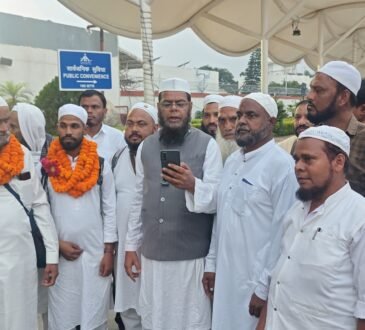
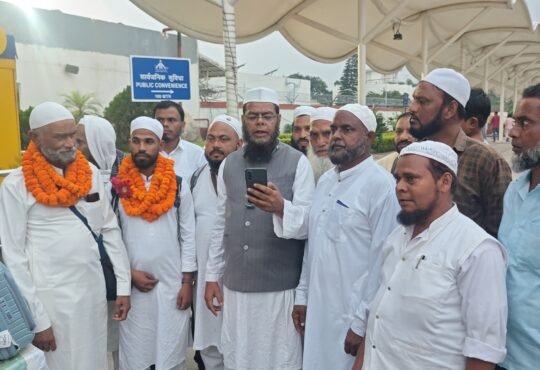
आ गए हैं देखिये उमरा कर सारे खुशनसीब: कारी सोहेब
oplus_1048576 रांची, 12 अक्टूबर। उमरा की सआदत हासिल करने के बाद सना हज व उमरा सर्विस के डायरेक्टर हाफिज गुलशाद...

दिल्ली में राहुल गांधी के नेतृत्व में विपक्ष के प्रदर्शन में शामिल हुए नुरुल्लाह हबीब नदवी
चुनाव आयोग के खिलाफ बारा खंभा मेट्रो स्टेशन से सुप्रीम कोर्ट तक निकाले गए प्रदर्शन में हुए शामिल दिल्ली। चुनाव...
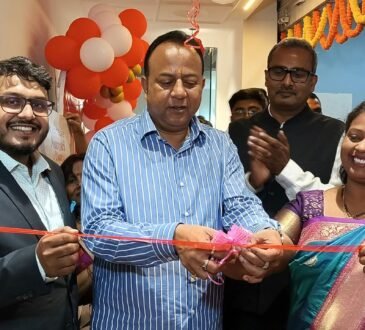
तीसरे एक्सपीरियंस सेंटर के साथ रांची में अपनी मौजूदगी मजबूत करते हुए होमलेन ने सिंग मोड़ में एक्सपीरियंस सेंटर का शुभारंभ किया
यह नया एक्सपीरियंस सेंटर सिंह मोड़, रांची के घर मालिकों को सुव्यवस्थित, डिज़ाइन-केंद्रित और एआई-सक्षम होम इंटीरियर समाधान प्रदान करेगा...
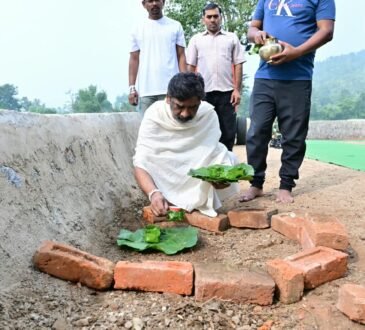
मुख्यमंत्री श्री हेमन्त सोरेन ने आज अपने पैतृक गांव नेमरा
मुख्यमंत्री श्री हेमन्त सोरेन ने आज अपने पैतृक गांव नेमरा में पूजनीय माता स्वर्गीय रूपी सोरेन की स्मृति में पारंपरिक...